
Gulf on the Edge: Why UAE Will Survive While Others Falter
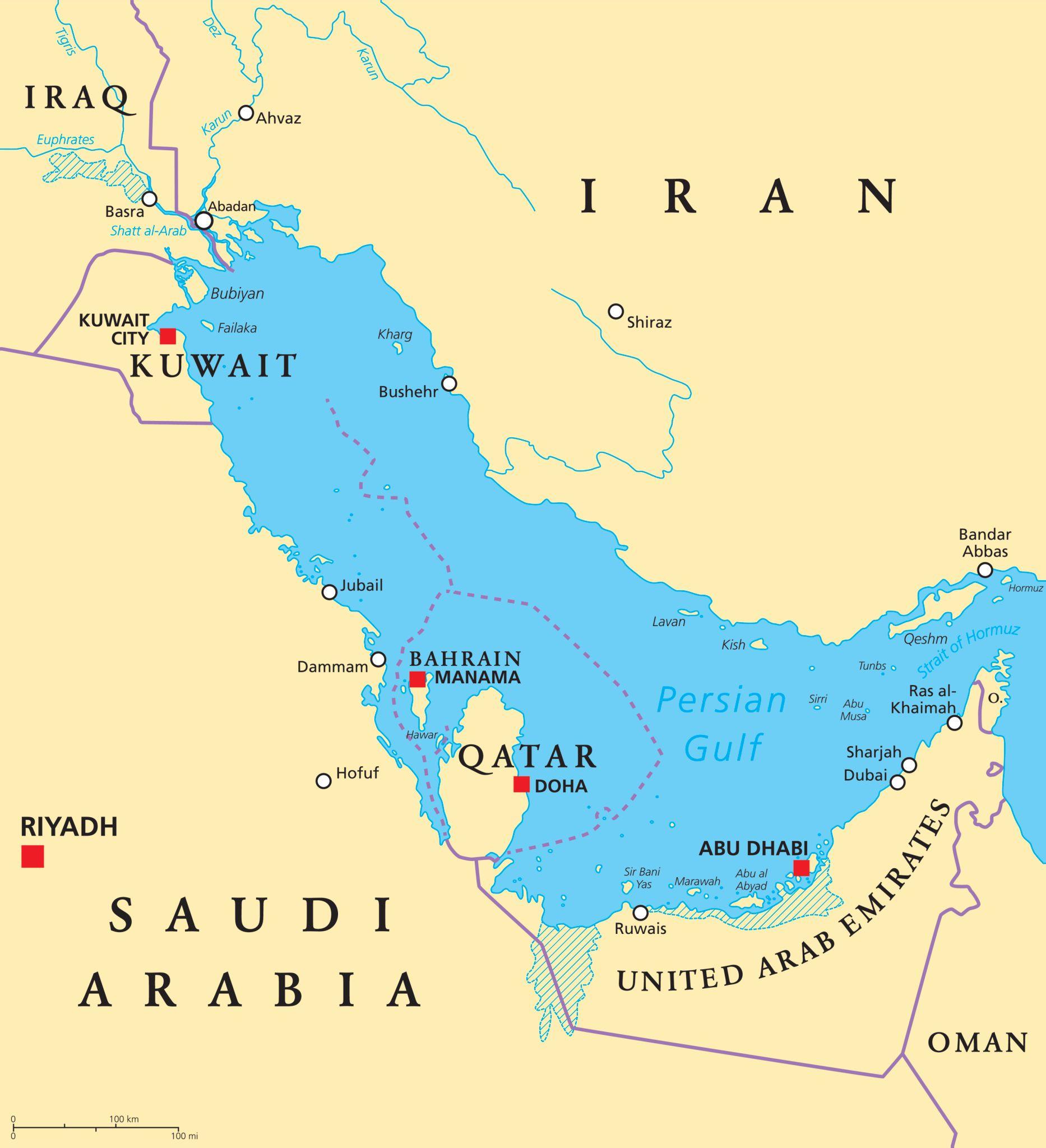
The Persian Gulf sits at the centre of global energy, finance, and geopolitics. Its oil powers economies across Asia, Europe, and the United States. Its sovereign wealth funds anchor financial markets. Its strategic location underpins US and allied military strategy. Yet beneath the gleaming skylines and enormous wealth lies a sobering reality: not all Gulf states are equally prepared for crisis.
The UAE stands apart as resilient, diversified, and forward-looking. Bahrain, Qatar, and Kuwait, by contrast, face structural vulnerabilities that could trigger economic and social turmoil.
Hormuz: The Strait that rules their fate
The Strait of Hormuz is a chokepoint that defines Gulf vulnerability. Roughly 20% of global oil passes through this narrow passage. If exports are blocked, essential imports—particularly food—cannot arrive. The irony is stark: the Gulf, rich in hydrocarbons, is heavily import-dependent for basic goods.
Iran, by contrast, is largely self-sufficient. Its energy, agricultural base, and domestic production allow it to endure shocks that would devastate smaller Gulf states. Rapid population growth, urbanization, and water scarcity in Bahrain, Qatar, and Kuwait magnify the impact of any disruption. Even a temporary blockade could create shortages and social unrest within weeks.
The UAE, with advanced logistics, diversified import sources, and substantial reserves, is better positioned to manage such disruptions. Its infrastructure and strategic foresight provide a buffer that its neighbours lack.
Economic Fragility: Wealth Is Not Immunity
History shows that even small financial shocks can trigger massive systemic collapse. In the 2008 US mortgage crisis, less than 2% of homeowners defaulted, yet it nearly brought the global economy to its knees.
The Gulf is even more sensitive. Its wealth, real estate markets, and sovereign funds rely on continuous confidence and capital mobility. If just 5% of expatriates or investors lose trust, it could trigger cascading failures: real estate prices collapse, capital leaves, and local banks face liquidity crises.
The UAE’s sovereign reserves ($100B), diversified investments, and conservative fiscal policies give it a cushion. Smaller states—Bahrain ($36B), Qatar ($335B but highly concentrated), and Kuwait ($750B but with high per-capita expectations)—are far more exposed to even minor shocks.
Dollar Pegs, Treasuries, and Global Interdependence
The Gulf’s currencies are pegged to the US dollar, supported by massive investments in US Treasuries. But global forces strain this system:
• China and India already hold substantial US debt, limiting Gulf purchases.
• Europe faces its own fiscal deficits.
• Korea and other defence-dependent states must redirect capital elsewhere, selling treasuries.
If Gulf states cannot continue buying Treasuries, only leveraged hedge funds remain to absorb debt—a form of modern money printing. The result: potential dollar weakness, making currency pegs unsustainable. UAE’s diversified reserves give it flexibility to manage these pressures, but smaller states lack this buffer.
US Policy: Rational for America, Risky for Allies
The United States cannot indefinitely act as global reserve currency issuer while running massive deficits and deindustrializing its economy. Domestic priorities are shifting.
For Gulf states, this creates a dilemma: the reliability of US naval protection, energy transit, and the petro-dollar system is no longer guaranteed. UAE’s prudent investments and independent planning reduce its exposure. Smaller emirates, heavily dependent on US guarantees, face an acute risk if Washington cannot maintain its presence.
Historical Lessons: Allies Suffer When Powers Decline
History offers cautionary examples of dependent states suffering when dominant powers falter:
- Rome: Economic and military decline led to abandonment of Britain and distant provinces, creating centuries of instability.
- Alexander’s Empire: Greek settlements in Central Asia were left marooned after his death, quickly losing political and economic viability.
- Hellenistic Cities of Asia Minor: Reliant on Greek support, they declined rapidly as central authority weakened.
- Mughal India: Regional vassals collapsed or realigned when the central economic base weakened.
The lesson is clear: dependency magnifies vulnerability. For the Gulf, reliance on US protection, global finance, and energy markets means smaller states are highly exposed to systemic shocks.
Why the UAE Stands Out
Among Gulf states, the UAE’s approach is markedly different:
- Diversified economy: Energy contributes a smaller share of GDP than in neighboring emirates.
- Sovereign reserves: Significant assets provide a buffer against economic shocks.
- Strategic planning: Investments in logistics, tech, and alternative energy reduce dependence on single points of failure.
- Resilient institutions: Governance, rule of law, and regulatory frameworks instill confidence in investors.
These factors make the UAE far more capable of surviving energy chokepoints, dollar volatility, or regional conflicts.
Dark Prospects for Smaller Emirates
Bahrain, Qatar, and Kuwait face multiple vulnerabilities:
• High dependence on oil revenue and single-sector wealth
• Smaller fiscal reserves relative to population and liabilities
• Heavy reliance on expatriate labor, making even minor capital flight critical
• Exposure to US protection and global financial flows
Even minor disruptions—5% exodus of professionals, a temporary Hormuz blockade, or treasury market instability—could trigger cascading crises affecting real estate, sovereign wealth, and social stability.
Entering an Uncharted Era
The Gulf’s current stability masks underlying fragility. Strategic chokepoints, demographic pressures, financial interdependence, and reliance on external powers create a perfect storm. The UAE’s foresight and resilience position it to survive and adapt. Smaller emirates may not be so lucky.
As global powers recalibrate, domestic priorities shift, and geopolitical tensions rise, the Gulf’s structural vulnerabilities are no longer theoretical—they are imminent and systemic. The UAE will likely weather the storm. Its neighbors face an uncertain, potentially dark future.
This article is published for informational purposes only and does not constitute investment advice or analysis. The information presented has been sourced from public domains and has not been independently verified. Vasuki Group makes no representations or warranties regarding the accuracy, completeness, timeliness, or reliability of the content. Neither Vasuki Group nor its affiliates, directors, employees, or representatives shall be liable for any errors, omissions, or reliance on the information provided. This article does not constitute an offer, solicitation, or recommendation for any investment, securities transaction, or contractual engagement. Readers should conduct their own due diligence before making any financial decisions. Any views expressed are those of the author and do not necessarily reflect the opinions of Vasuki Group. Further, Vasuki Group may hold or take positions in the market that differ from the views expressed in this article. All rights reserved. Vasuki Group reserves the right to update or modify this article at its discretion. For more information, reach out to us on research@vasukiindia.com.