
Hormuz Controls More Than Oil
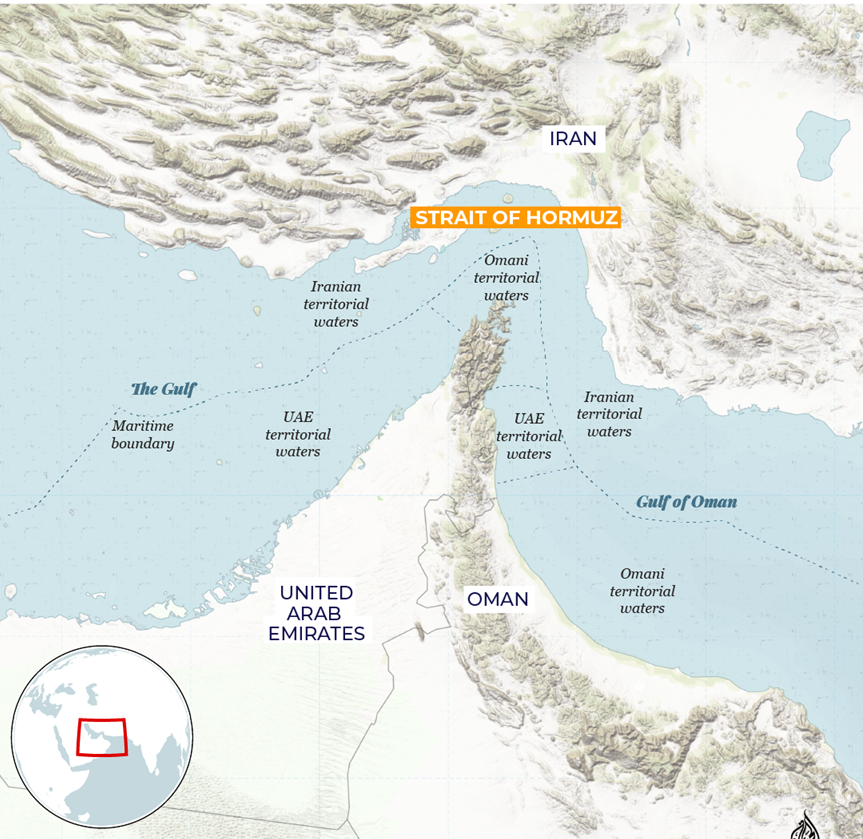
The Strait of Hormuz is usually described as the world’s most important oil chokepoint. Nearly one-fifth of global oil consumption passes through this narrow waterway each day.
But oil is not the only thing that flows through the Gulf.
The region also powers one of the largest labor migration systems in human history.
Across Saudi Arabia, the UAE, Qatar, Kuwait, and Oman, tens of millions of migrant workers keep economies running — building cities, staffing hospitals, maintaining infrastructure, driving logistics networks, and sustaining the daily functioning of wealthy energy states.
Most of these workers come from South and Southeast Asia, as well as parts of Africa. Their labor does not just support Gulf economies. It sustains their home countries through remittances — the money they send back to their families every month.
Globally, remittances now exceed $850 billion a year, making them one of the largest financial flows in the world — larger than foreign aid and, in many countries, more stable than foreign investment.
For several economies, these flows are not supplementary. They are structural.
Remittances from workers abroad provide a critical share of national income:
• Pakistan: roughly $30–35 billion annually, about 8–10% of GDP
• Philippines: about $35–38 billion, roughly 9% of GDP
• Bangladesh: around $22–25 billion, about 6% of GDP
• Egypt: more than $30 billion annually
• Nepal: nearly 25% of GDP
For many of these countries, remittances exceed foreign aid, rival export earnings, and provide the foreign currency needed to import food, fuel, and medicine.
Pakistan offers a striking example. Over the past two decades remittances have grown from a relatively modest flow into one of the largest pillars of the economy. Today they represent a vital source of foreign exchange, helping stabilize the currency and finance essential imports.
Remove this flow and the pressure on the economy would become immediate.
When analysts think about geopolitical disruptions, they tend to focus on the most visible consequences.
If the Strait of Hormuz were closed, oil prices would spike. Tanker traffic carrying roughly 20 million barrels of oil per day would be disrupted. Global energy markets would convulse.
These are the first-order effects — the ones that dominate headlines.
But complex systems rarely unravel at the first shock. The deeper disruptions often appear in the second and third layers of the system.
The Gulf is not just an energy hub. It is also a vast employment engine for migrant labor.
Construction cranes across Dubai, Riyadh, and Doha are powered by workers from Pakistan, India, Bangladesh, Nepal, Egypt, and the Philippines. Entire communities in these countries depend on the salaries earned in the Gulf.
If a major conflict in the region — perhaps one involving Iran — were to close the Strait of Hormuz for an extended period, the immediate impact would indeed be felt in oil markets.
But a quieter chain reaction would begin at the same time.
Energy exports would slow. Government revenues across the Gulf would shrink. Infrastructure projects would halt. Private sector activity would contract.
And millions of migrant workers could suddenly find themselves without jobs.
When that happens, remittance flows collapse quickly. But an even more powerful shock follows.
The workers themselves come home.
History offers glimpses of how disruptive that moment can be.
During the 1990–91 Gulf War, Iraq’s invasion of Kuwait triggered a sudden exodus of foreign labor. Nearly two million migrant workers fled the region within months. Egypt repatriated hundreds of thousands of citizens almost overnight. Jordan absorbed an influx equivalent to nearly 10% of its population in a single year, straining housing, labor markets, and public finances.
More recently, the COVID-19 pandemic created a smaller but revealing version of the same phenomenon. As Gulf economies slowed and travel halted, hundreds of thousands of migrant workers returned to South Asia. Regions that depended heavily on remittance income experienced sudden economic stress as household incomes disappeared and local job markets struggled to absorb returning workers.
These episodes were temporary shocks.
A prolonged closure of Hormuz could produce something far larger.
If Gulf economies slowed sharply, millions of migrant workers could begin returning to their home countries over a relatively short period of time. Remittance inflows would shrink just as domestic labor markets suddenly faced a surge in job seekers.
The consequences would cascade through several channels at once.
Households that depended on monthly remittances would lose their primary source of income. Local businesses would lose customers. Foreign currency inflows would fall, placing pressure on exchange rates and making imports more expensive.
Governments already struggling with debt and fiscal constraints would face rising unemployment and growing social pressure.
And the returning workers themselves would not be the same individuals who originally left.
Many would come back with savings, international exposure, and new expectations. They would have seen higher wages, functioning infrastructure, and more efficient systems of governance. Returning to economies with limited opportunity can produce frustration as well as awareness.
When large numbers of such workers return simultaneously, the pressure on social and political systems can rise quickly.
A prolonged disruption in the Strait of Hormuz might or might not resolve whatever conflict triggered it — whether a confrontation involving Iran, Israel, or a wider regional war.
But the consequences would not remain confined to the Gulf.
They would travel quietly along migration routes and financial channels — through Karachi, Dhaka, Cairo, and Manila.
Oil tankers might stop moving through Hormuz.
Soon after, millions of workers could begin moving the other way — back toward economies that cannot easily absorb them.
And one of those economies is Pakistan, a politically fragile country of more than 240 million people, already under economic strain — and armed with nuclear weapons.
The Strait of Hormuz may control the flow of oil.
But in a deeply interconnected world, it also helps control the flow of people, money, and stability far beyond the Gulf itself.
By Vikas Sehgal
This article is published for informational purposes only and does not constitute investment advice or analysis. The information presented has been sourced from public domains and has not been independently verified. Vasuki Group makes no representations or warranties regarding the accuracy, completeness, timeliness, or reliability of the content. Neither Vasuki Group nor its affiliates, directors, employees, or representatives shall be liable for any errors, omissions, or reliance on the information provided. This article does not constitute an offer, solicitation, or recommendation for any investment, securities transaction, or contractual engagement. Readers should conduct their own due diligence before making any financial decisions. Any views expressed are those of the author and do not necessarily reflect the opinions of Vasuki Group. Further, Vasuki Group may hold or take positions in the market that differ from the views expressed in this article. All rights reserved. Vasuki Group reserves the right to update or modify this article at its discretion. For more information, reach out to us on research@vasukiindia.com.