
The Age of Fiscal Illusion
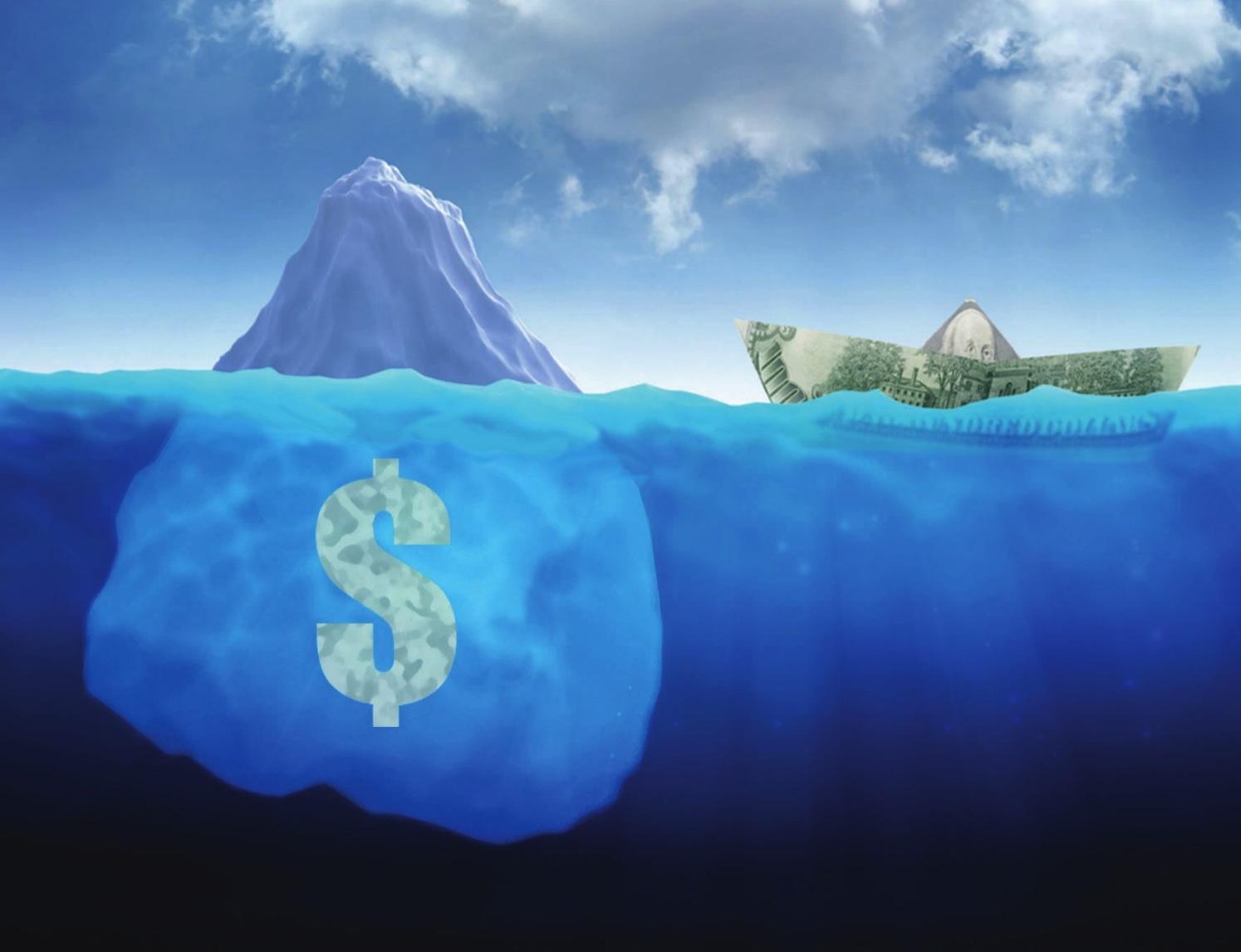
When Democracies Run Out of Your Money
“Empires rarely collapse because of a single catastrophe. They collapse because the math finally catches up with the politics.”
“Democracy is the worst form of government—except for all the others that have been tried.”
The observation by Winston Churchill has endured because it captures a fundamental truth. Democracy is inefficient, chaotic, and often irrational. Yet compared with monarchy, dictatorship, or technocracy, it has proven remarkably resilient.
But the democracy Churchill defended is not the democracy that exists today.
Over the past century, something fundamental has shifted. The relationship between citizens, the state, and economic responsibility has been quietly rewritten.
What began as a system grounded in shared obligation has gradually evolved into something else entirely: a political machine capable of redistributing wealth on an immense scale.
For decades, the system seemed stable.
Now it is colliding with arithmetic.
Across much of the world, governments are confronting a problem they can barely admit aloud: they are running out of money that belongs to other people.
And history suggests that when states reach this point, the consequences are rarely mild.
The Forgotten Contract
The earliest democratic systems were built on a simple premise: power required responsibility.
In the city-states of ancient Greece, political participation was largely restricted to male citizens who owned property and served in the military. Citizenship was not merely a privilege—it was a burden.
The same logic governed the Roman Republic.
Property ownership determined political influence, and political influence carried military obligation.
Citizens voted for wars—and then fought them.
They approved taxation—and then paid it.
Political decision-making and economic responsibility were inseparable.
Modern democracy gradually dissolved that link.
Industrialization, social reform, and the moral force of equality expanded suffrage until nearly every adult gained the right to vote. The transformation was morally compelling and politically inevitable.
But it also altered the internal incentives of the system.
The ballot box ceased to be merely a mechanism of representation.
It became a mechanism of allocation.
“Once voters realize the treasury can be accessed through elections, politics becomes a competition to divide the spoils.”
Democracy as Distribution
In theory, redistributive policies can strengthen societies. Modern welfare states emerged after the devastation of the Second World War and played an important role in stabilizing economies and reducing poverty.
But democratic systems operate under powerful incentives.
Politicians must win elections.
Winning elections requires assembling coalitions.
Coalitions are often built through promises.
Subsidies.
Transfers.
Tax credits.
Public employment.
Industrial policy.
Each policy may be defensible on its own.
But over time the promises accumulate.
And eventually the promises exceed the resources available to fund them.
Political rhetoric frequently centers on the idea of “taxing the rich.”
It is a potent slogan.
But as a long-term fiscal strategy, it rarely works.
Capital in the modern world is extraordinarily mobile. Wealthy individuals can shift assets, restructure holdings, or relocate across borders with relative ease.
Capital travels lightly.
The middle class does not.
In practice, the financial backbone of the modern state becomes the salaried professional, the small business owner, and the middle-income household tied to a job and a location.
Meanwhile, the political class itself often prospers.
Across many democracies, those who enter politics emerge far wealthier than when they began.
Public service is theoretically about sacrifice.
In reality, there is often no business quite like the business of the state.
The Limits of Taxation
Eventually, even the most ambitious redistributive systems encounter limits.
Economists describe one such limit through the Laffer Curve. At low tax rates, raising taxes increases government revenue. But beyond a certain threshold, higher taxes begin to discourage work, investment, and entrepreneurship.
Push the tax burden too far and revenues begin to fall.
Many advanced economies are already approaching that boundary.
In large parts of Europe and North America, total tax burdens approach or exceed 40–50 percent of GDP.
Beyond that level, further increases risk suffocating the economic engine that produces tax revenue in the first place.
But democratic systems rarely shrink gracefully.
When taxation reaches its limit, governments turn to borrowing.
“Debt allows democracies to postpone reality. It does not eliminate it.”
The Seduction of Debt
Borrowing is politically irresistible.
It allows governments to deliver benefits today while shifting the cost into the future.
Current voters receive services.
Future taxpayers receive the bill.
For decades this arrangement appeared sustainable. Interest rates remained low, global savings were abundant, and financial markets willingly absorbed enormous quantities of government debt.
But debt compounds.
Eventually, interest payments begin consuming large portions of government budgets. Fiscal flexibility disappears.
Many major economies have already crossed the threshold where government debt approaches—or exceeds—the size of the national economy.
At that point the political choices become brutally constrained.
Raise taxes and risk economic contraction.
Cut spending and face electoral revolt.
Or reach for the oldest fiscal trick in history.
Debase the currency.
The Ancient Art of Debasement
Currency debasement is as old as government itself.
In the ancient world, rulers shaved precious metals from coins.
In the modern world, governments expand the money supply.
The mechanics differ.
The outcome is the same.
Reduce the value of money, and the real burden of debt declines.
As the economist Milton Friedman famously observed, governments have only three ways to finance spending:
taxation, borrowing, and inflation.
Inflation is taxation carried out quietly.
It reduces the purchasing power of wages.
It erodes savings.
It redistributes wealth from the prudent to the leveraged.
For governments trapped by rising debt and political resistance to austerity, inflation is often the path of least resistance.
History suggests it is also the path of greatest danger.
“When states cannot tax more and cannot borrow more, they print.”
Rome: When Money Stops Meaning Anything
The late Roman Empire provides a chilling example.
During the third century, the empire faced spiraling military costs and political chaos. To finance the state, successive emperors debased the silver denarius.
Over time, the coin’s silver content collapsed.
Prices surged.
Trade deteriorated.
Tax collection became increasingly difficult.
The crisis—known as the Crisis of the Third Century—fractured the empire. Breakaway states emerged across Gaul and the eastern provinces. Military commanders declared themselves emperors. Civil wars became routine.
Rome survived.
But its monetary system never fully recovered.
Trust in the currency had been destroyed.
And monetary trust, once broken, is painfully difficult to rebuild.
Spain: When Treasure Becomes Poison
If Rome demonstrated the dangers of debasement, imperial Spain demonstrated the dangers of sudden wealth.
In the 16th century, silver from the mines of Potosí flooded into Europe. The Spanish crown appeared unimaginably rich.
The reality was quite different.
The surge in precious metals triggered the Price Revolution, a sustained wave of inflation across Europe. Spanish industry weakened as cheap imports flooded the economy.
The crown borrowed aggressively against future silver shipments to finance wars across the continent.
Eventually the empire defaulted repeatedly.
The treasure that seemed to guarantee Spanish dominance instead hollowed out its economic foundations.
Easy money had replaced discipline.
And easy money rarely ends well.
Britain: Decline Managed
The British Empire confronted its own fiscal limits after the Second World War.
Two global conflicts left Britain deeply indebted. Maintaining a vast empire had become financially impossible.
Unlike earlier powers, Britain managed a relatively gradual adjustment. Colonies gained independence. Global financial leadership shifted toward the United States.
The process was not painless.
The 1970s brought inflation, stagnation, and deep political unrest.
But institutional flexibility allowed Britain to adapt rather than collapse.
History does not always end in catastrophe.
But adaptation requires discipline.
And discipline is precisely what democratic politics struggles to sustain.
The American Moment
Today the United States sits at the center of the global financial system.
The dollar remains the world’s dominant reserve currency. U.S. Treasury bonds remain the benchmark safe asset.
This status grants America extraordinary financial flexibility.
But it does not suspend arithmetic.
Federal debt continues to rise. Entitlement spending expands as populations age. Political polarization makes long-term fiscal reform increasingly difficult.
Reserve-currency status can extend the timeline.
It cannot eliminate the reckoning.
“Reserve currencies delay consequences. They do not cancel them.”
The Fiscal Trap
History shows that great powers encounter the greatest danger when three forces converge:
High taxation.
High debt.
Currency debasement.
Each reinforces the others.
Taxes suppress growth.
Debt magnifies fragility.
Inflation erodes trust.
Together they create a fiscal trap from which few states escape easily.
The Erosion of Trust
The greatest danger of fiscal exhaustion is not merely economic.
It is psychological.
Modern societies function because citizens believe in the system.
They believe their currency will hold value.
They believe their government will honor its debts.
They believe institutions will endure.
When inflation rises, debt explodes, and politics becomes polarized, that belief begins to weaken.
And once trust begins to fracture, events can accelerate with astonishing speed.
Economic crises become political crises.
Political crises become institutional crises.
And institutional crises, once unleashed, are extraordinarily difficult to reverse.
The Edge of the Cliff
Democracy remains the most adaptable political system humanity has created.
But even democracy cannot repeal arithmetic.
Across the developed world, taxation is near historical limits.
Debt has reached levels rarely seen outside wartime.
Monetary expansion has become routine.
The world is entering the same late-cycle phase that has preceded the weakening of many great powers.
Empires rarely collapse suddenly.
They weaken first.
They improvise.
They postpone.
And then, sometimes abruptly, they break.
The bill for decades of fiscal illusion is beginning to arrive.
And when the bill finally arrives, there may be no one left to send it to.
History suggests that societies rarely collapse because they run out of resources. They collapse when they run out of trust. When citizens begin to see the state not as a common enterprise but as a mechanism of extraction, the invisible threads that bind a polity together begin to fray. Rome discovered this in the third century. Spain in the seventeenth. Britain in the long twilight of empire. The United States and the wider developed world now stand at a similar fiscal and political juncture — where taxation strains the productive, debt burdens the future, and debasement quietly taxes everyone. Whether the outcome is decline, renewal, or something more dramatic will depend on whether democracies rediscover an older truth: that prosperity cannot be voted into existence, and that a state which spends beyond the capacity of its citizens ultimately spends the foundations of its own survival.
This article is published for informational purposes only and does not constitute investment advice or analysis. The information presented has been sourced from public domains and has not been independently verified. Vasuki Group makes no representations or warranties regarding the accuracy, completeness, timeliness, or reliability of the content. Neither Vasuki Group nor its affiliates, directors, employees, or representatives shall be liable for any errors, omissions, or reliance on the information provided. This article does not constitute an offer, solicitation, or recommendation for any investment, securities transaction, or contractual engagement. Readers should conduct their own due diligence before making any financial decisions. Any views expressed are those of the author and do not necessarily reflect the opinions of Vasuki Group. Further, Vasuki Group may hold or take positions in the market that differ from the views expressed in this article. All rights reserved. Vasuki Group reserves the right to update or modify this article at its discretion. For more information, reach out to us on research@vasukiindia.com.